
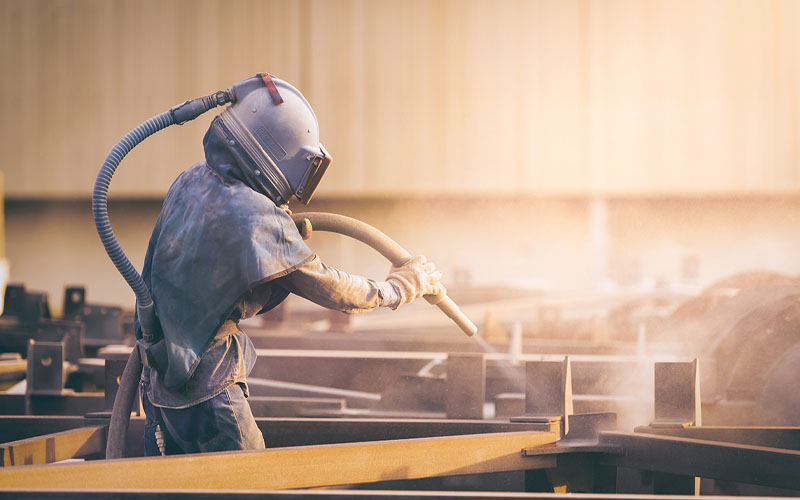
Corrosion gradually damages metal surfaces—affecting appearance, reducing strength, and weakening structural integrity over time. The good news is that sand blasting offers an effective solution to restore metal machinery and equipment to near-original condition.
In this blog, we explore the best sand blasting techniques to treat corroded metal surfaces efficiently and safely.
Understanding the Surface Before You Start
Every corroded surface is different. Some may have light surface rust, while others suffer from deep, heavy corrosion.
Applying the same blasting technique to all surfaces can lead to poor results or even damage. A proper surface assessment helps you:
- Choose the right method
- Avoid unnecessary material loss
- Improve efficiency and final finish
A careful evaluation at the start saves time, cost, and rework later.
Choosing the Right Abrasive Material
The choice of abrasive plays a critical role in the success of sand blasting:
- Steel Grit – Ideal for heavy corrosion; provides aggressive cleaning and a rough surface profile for coatings
- Garnet – Offers a balance between cleaning efficiency and surface smoothness
- Glass Beads – Best for light corrosion; produces a smooth, refined finish
Selecting the wrong abrasive may result in ineffective cleaning or surface damage, so always match the material to the condition of the metal.
Dry Sand Blasting for Heavy Corrosion
For surfaces with severe rust and scale, dry sand blasting is highly effective.
- Removes thick corrosion layers quickly
- Strips old coatings and contaminants
- Provides a strong surface profile for repainting
However, pressure control is critical:
- High pressure increases speed but may damage softer metals
- Lower pressure ensures better control and precision
Maintaining the right balance ensures effective cleaning without over-erosion.
Nozzle Control and Angle Matter
Even with the best equipment, technique determines the final result
- Hold the nozzle at a slight angle (not directly perpendicular)
- Maintain a consistent distance from the surface
- Use steady, overlapping strokes
This approach helps:
- Lift rust efficiently
- Avoid embedding contaminants deeper into the metal
- Achieve a uniform finish
Think of the process like painting—smooth, controlled movements give the best results.
Surface Profile and Final Finish
A clean surface is not enough—the surface profile is equally important.
After blasting:
- The surface should feel evenly textured, not overly rough or too smooth
- Proper texture ensures strong coating adhesion
- Incorrect profiling can lead to coating failure or additional rework
A well-prepared surface is the foundation for long-lasting protection.
Safety Comes First
Sand blasting involves high pressure and airborne particles, so protective gear is essential:
- Safety mask or respirator
- Protective gloves and clothing
- Eye protection
A clean and organized workspace also improves safety and work quality.
Final Thoughts
Restoring corroded metal is not just about using sand blasting—it’s about using the right technique, materials, and control.
For the best results, it is always recommended to work with experienced professionals who understand surface preparation standards and industrial requirements.
Need Professional Sand Blasting Services in UAE?
You are already in the right place.
We provide specialized sand blasting and surface preparation services at competitive prices, ensuring high-quality results for all types of industrial applications.
📞 Call us today: +971 557160973