
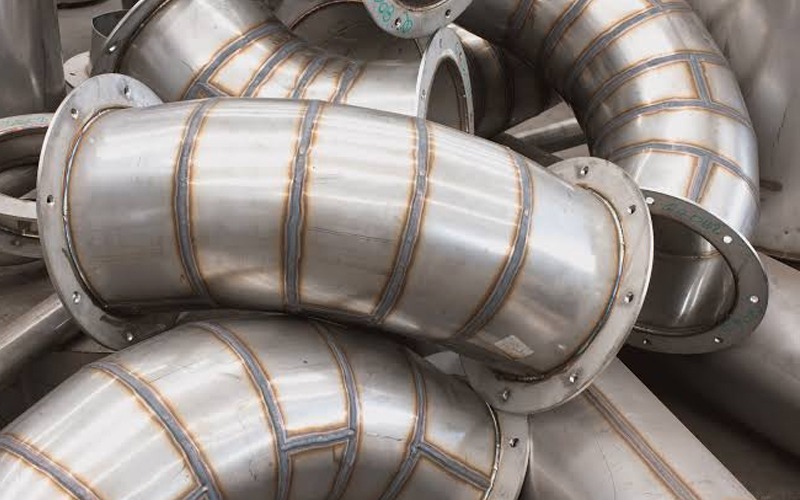
How is it possible for stainless steel to rust, have discoloured welds, or even corrode despite being rust-resistant? Most often, it is due to fabrication residues, the presence of iron, welding oxides, or lack of proper chemical treatment. This post will discuss some most common problems associated with pickling and passivation and how to prevent them.
Use of Passivation to Remove Weld Heat Tint
Welding may lead to the formation of oxide scale of various colours and a depleted chromium layer underneath. Such layers may become more prone to pitting and crevice corrosion, especially in the presence of chlorides.
Passivation should not be used as an alternative for removal of heavy oxide scale and weld heat tint. The pickling process will remove such oxides and the affected layer using chemical means.
How to avoid it: Inspect welds before the treatment process. Choose a proper pickling or other descaling technique where there is oxide scale, followed by whatever further treatments may be needed according to specifications.
Skipping Pre-Cleaning
Oil, grease, cutting fluids, and marking residues may prevent uniform contact between the treatment solution and the surface of the stainless steel. Pickling and passivation cannot be used to clean all the contaminants.
How to avoid it: Clean the parts using an appropriate cleaning technique before performing the chemical treatment. Take special care when cleaning welds, machined surfaces, and hidden surfaces. Verify that the parts are clean before proceeding.
Ignoring Iron Contamination
Carbon steel tools, grinding equipment, steel wool, and contaminated work surfaces can introduce free iron particles onto stainless steel.
These particles may subsequently rust, creating brown spots that are mistaken for failure of the stainless steel itself.
How to avoid it: Use dedicated stainless steel tools and clean work surfaces. Prevent contact with carbon steel debris and protect treated components during handling and storage. Where required, verify the removal of free iron through an appropriate test rather than relying on visual inspection alone.
Using Inappropriate Chemical Treatment Conditions
The use of an incorrect chemical, concentration, temperature, or time period will result in inadequate cleaning, over-etching, pitting, or surface damage. Some grades of stainless steel may need a different treatment than others depending on the surface condition.
How to avoid it: Make sure that an appropriate procedure is used based on the alloy, component geometry, and desired finish. Ensure the process parameters are correct according to the chemical manufacturer's recommendations and the technical specifications. Since pickling chemicals are very corrosive, the proper chemical handling guidelines should be followed.
Leaving Acid Residues in Crevices and Pipework
An inadequate rinse may result in chemicals becoming locked inside threaded joints, welded joints, small cavities, or pipework. The residual acids may then act on the metal and result in localised corrosion.
How to avoid it: The process design should allow good solution circulation and draining and rinsing of all components. Special attention should be paid to hard-to-reach spots. Neutralisation should be performed according to the approved procedure; it is not an alternative to proper rinsing.
Choose Reliable Pickling and Passivation Services in the UAE
Effective surface treatment requires correct precleaning, appropriate chemical processing, thorough rinsing, contamination control, and documented verification. When evaluating pickling passivation services in the UAE, assess the provider's experience with your stainless-steel grade, ability to follow project specifications, chemical safety procedures, and quality documentation.
Need to protect stainless steel piping, tanks, or fabricated equipment against avoidable corrosion? Contact an experienced surface treatment provider in the UAE to discuss your material grade, weld condition, operating environment, and inspection requirements. Request a technical proposal that defines the treatment process, acceptance criteria, and final inspection records before work begins.


