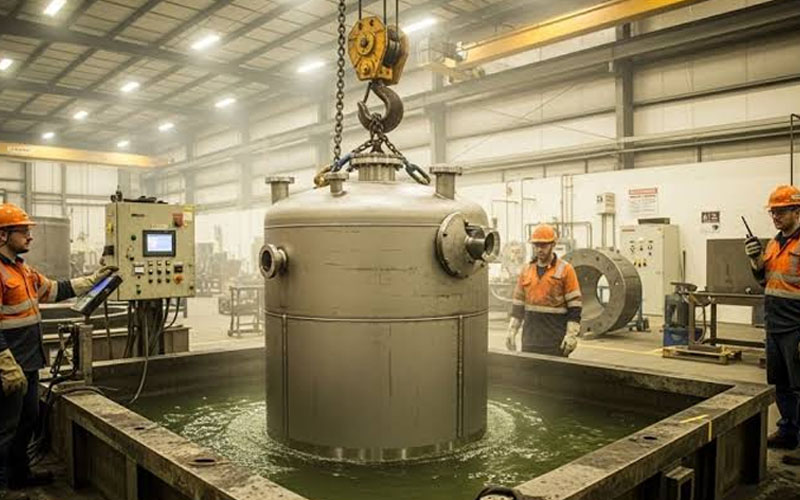
The Benefits of Professional Pickling and Passivation for UAE Industrial Projects
Are you doing enough to protect your stainless-steel equipment from corrosion, surface contamination, and early damage? Professional pickling and passivation help protect stainless steel, improve its surface condition, and support long-term use in demanding industrial environments.
Understanding Pickling and Passivation
Pickling and passivation are two surface treatments that complement each other to increase the corrosion resistance of stainless steel. The process of pickling eliminates any impurities on the surface of stainless steel, as well as any heat tint and weld scale left from manufacturing, welding or fabricating.
The process of passivation facilitates the creation of a stable chromium oxide layer on the surface of stainless steel, which is an important component of protecting it from corrosion. Even though stainless steel contains chromium in its structure, the welding, cutting and fabricating of stainless steel might negatively influence its protective surface.
Benefits of Professional Pickling and Passivation
1.Increased Resistance to Corrosion
The surfaces of stainless-steel apparatus, pipes, tanks, and structural elements may become vulnerable to corrosion. This is a problem that might arise in the case of industrial operations in the UAE because of the difficult climate conditions there. Pickling and passivation help clean the surface from possible contamination and create a protective oxide layer. It allows reducing the probability of rusting and corrosion if the right treatment is chosen depending on the stainless-steel grade and operational environment. Thus, you will be able to preserve your equipment in good condition for a long time.
2. Cleaner Stainless-Steel Surfaces
Welding and fabrication can leave heat marks, oxide scale, and iron particles on stainless steel surfaces. These unwanted materials can affect the appearance and corrosion resistance of the finished product. Pickling removes many of these surface contaminants and helps create a cleaner, more uniform finish. Passivation then supports the development of the protective chromium oxide layer. This is particularly useful for industrial equipment where surface cleanliness and material performance are important.
3. Longer Service Life of Industrial Equipment
Replacing damaged stainless-steel equipment can increase project costs and create unnecessary delays. Pipes, storage tanks, processing equipment, and other components need proper care to perform reliably. Professional surface treatment helps reduce the risk of premature corrosion caused by fabrication-related contamination. By maintaining the protective properties of stainless steel, you can support a longer service life and reduce the need for avoidable repairs or replacements. However, the results also depend on correct material selection, installation, cleaning, and regular maintenance.
4. Better Quality after Welding and Fabrication Process
Welding is quite a typical process for industrial construction and fabrication of machines. Nonetheless, the heat of the welding process forms an oxide layer and heat tint on welds and other parts of surfaces that were processed with welding. This can negatively impact the corrosion resistance of the processed surface. Pickling makes it possible to eliminate the oxide layer formed, while passivation allows restoring the protective layer on the surface. Professional treatment is very helpful in case of welds, fabricated elements and stainless-steel constructions.
5. Support for Industrial Hygiene and Cleanliness
Industries such as food processing, pharmaceuticals, and chemical manufacturing often require clean and well-maintained stainless-steel surfaces. Contaminants, rough surface conditions, and corrosion can create cleaning and maintenance challenges. Proper pickling and passivation help remove unwanted surface residues and improve corrosion resistance. When combined with suitable surface finishing and cleaning procedures, these processes support better equipment hygiene. You should also ensure that the treatment method meets the cleanliness requirements of your particular application.
6. Long-term Cost Benefits
Professional surface treatment is an investment in protecting equipment. While pickling and passivation treatments have an upfront service cost, they may assist in reducing costs due to corrosion-related damage, maintenance, and early replacement. In UAE-based industrial projects, where equipment dependability and schedule are key, avoiding unnecessary surface damage can prove to be significant. Selecting the proper surface treatment at the fabrication or installation stage can also assist in avoiding extra work.
7. Why Professional Treatment is Important
Pickling and passivation need appropriate use of chemicals, application techniques, duration of treatment, and safety measures. Inappropriate procedures may lead to corrosion of stainless steel or even residual chemicals. When searching for service providers, consider their previous experience with stainless steel usage in industry, their handling processes of chemicals, waste management methods, and quality control procedures. Check if they comply with the standard of ASTM A380/A380M and ASTM A967/A967M when needed. In addition, you need to know if they include inspection, rinse, and passivation tests in the procedure.
Choose the Right Pickling and Passivation Support for Your Project
Whether you are working on a new industrial installation, stainless steel fabrication, or equipment maintenance, proper surface treatment can make a lasting difference. Professional pickling and passivation services in the UAE can help you maintain cleaner surfaces, improve corrosion resistance, and protect valuable industrial assets.
Do not wait for surface problems to affect your equipment or project schedule. Choose a suitable treatment process based on your material, application, and operating conditions. The good news for you is that you don’t need to go anywhere to find a trusted service provider because you have already come to the right place. Contact our team today to discuss your industrial pickling and passivation requirements and request a service quote.